"At Viraj International School we believe that learning must lead to an awareness and recognition of one's individual sensibilities, and to the development and moulding of character, whereby one's dignity and self-worth is enhanced."
Our aim is to develop and shape character in ways that uphold integrity, compassion, and responsibility. We strive to nurture young minds with values that help them build a strong foundation of self-discipline and moral ethics. This enables them to navigate life with dignity, self-worth, and a sense of purpose.
By fostering such growth, we ensure that learning at our institution not only enriches intellectual capabilities but also strengthens emotional resilience. Our holistic approach ensures that students are equipped to become confident, compassionate, and well-rounded individuals, ready to contribute meaningfully to society.
A regular assessment of students work is considered crucial in the educational process. Progress would be discussed with both parents and students. In Primary, school the assessment will be based on class work, homework, projects, and short assisted quizzes and worksheets.
Report frequency - Students will receive three reports in a year. Reports include an objective assessment of the effort and achievement of the student as well as personalized comments by teachers.
Parent - Teacher meetings - There will be formal parents - teacher meetings for each class after every 45 to 50 working days. A precise system of appointments ensures that parents have the opportunity to discuss their child's progress with some or all of the teachers involved.

VIS provides comprehensive Marking Schemes developed / finalised through discussions and active participation of teachers. It is significant to know that:
VIS evaluates totalling and preparing the award lists. While the first co-ordination is done by one co-ordinator, the second co-ordination is undertaken by the entire team of examination committee to ensure error free data at the pre-declaration stage
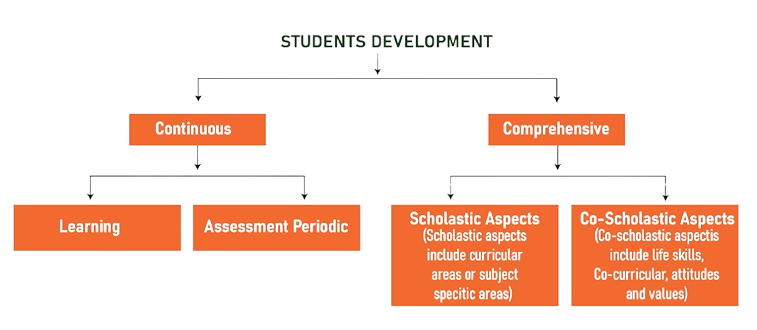
In addition to serving the purpose of certification and classification, examinations are also considered to be powerful tools for improving the teaching process. The analysis of students' responses to different questions asked in the examination can serve to diagnose the weakness in learning as well as shortcomings in curriculum transactions. It may reveal hard spots of learning and possible causative factors for errors being committed. Besides such an analysis helps in identifying areas of content to which much attention has not been devoted.
2 summative assessments
Conducted twice yearly to assess progress.
Comprehensive yearly exam for evaluation.
Regular assessments to monitor performance.